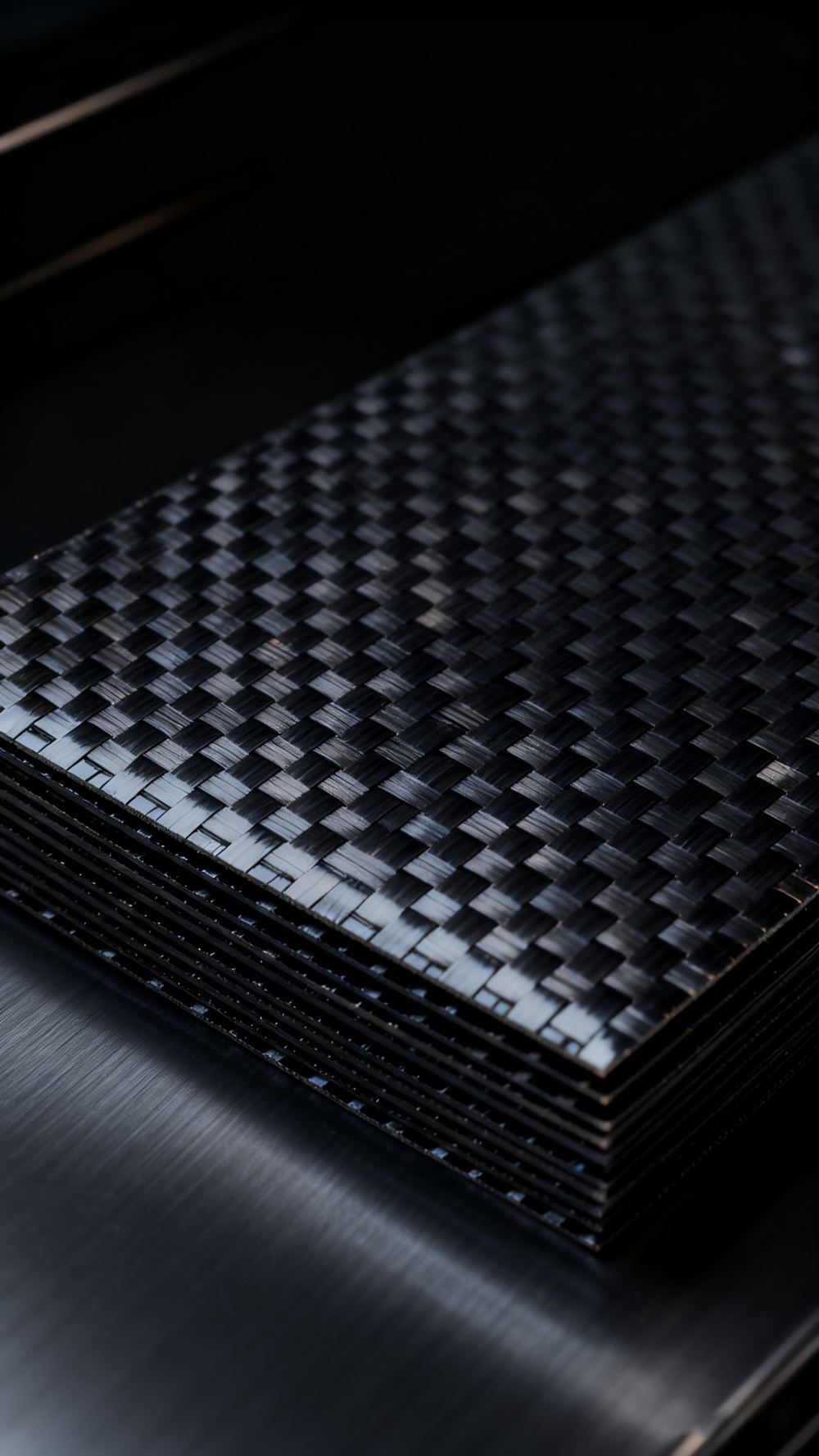
Carbon Fiber vs Aluminum for OEM Parts: A Practical Comparison
For OEM parts, compare carbon fiber and aluminum against the same load, deflection, environment and assembly requirements. Then compare finished weight and quoted cost. A material property table can help screen options, but it cannot approve a replacement part.
Start with the reason for considering a material change
Before asking which material is better, write down what the new part must improve. Is the objective a lower moving mass, a different shape, a more stable mounting position or a lower purchase cost? Identify the current part and the measurement that will show whether the change succeeds.
If an existing aluminum component already meets the operating requirements, a carbon fiber alternative needs a clear project benefit. If you are designing a new assembly, give both candidate designs the same functional requirements instead of fixing every dimension before the comparison begins.
DragonPlate's Carbon Fiber vs Aluminum article compares strength, stiffness, density and thermal behavior. It also notes that its figures are generalizations. For an OEM decision, ask which aluminum alloy and condition, and which cured composite construction, the comparison actually represents.
Specify the material behind the name
In this article, carbon fiber refers to a carbon fiber reinforced polymer composite, or CFRP, rather than bare carbon fibers. The distinction matters when reviewing a data sheet.
Hexcel's Prepreg Technology manual, page 24 explains that fibers carry most of the applied load, while the matrix influences service temperature, toughness and environmental resistance. Unidirectional composites have pronounced directional properties, and fiber orientation can be arranged to meet particular requirements.
Ask for an aluminum specification that identifies the alloy and material condition. For a composite proposal, request the fiber and resin system, laminate construction, thickness and manufacturing method. Where proprietary layup details cannot be disclosed, agree on the performance specification and evidence that will be supplied instead.
A fiber tensile-strength value is not a test result for a finished bracket, tube or panel. Keep material data, laminate data and component validation clearly separated when reviewing a proposal.
Compare designs that perform the same job
Copying a metal part's shape and changing only the material can miss opportunities or overlook different design constraints. Ansys discusses this problem in Why Switching to Composite Materials Requires a New Product Design. Its explanation emphasizes the role of individual plies, their orientation and relevant failure criteria.
For a fair procurement comparison, define the installation envelope and interfaces that must remain fixed. Then identify which dimensions or construction details the designer may change. Agree on how both candidates will demonstrate the required function.
Use this comparison sheet before approving samples:
| Decision | Record for both candidate designs |
|---|---|
| Weight | Finished assembly mass, including inserts, fasteners, connectors and coatings |
| Stiffness | Applied load, support conditions and permitted movement or deflection |
| Strength and durability | Relevant load cases, acceptance criteria and validation method |
| Fit | Critical interfaces, datums and finished dimensional limits |
| Temperature and exposure | Required operating conditions and the evidence supporting suitability |
| Purchasing scope | Drawing revision, quantity, included machining and finishing operations, inspection and delivery terms |
The table is a comparison method, not a specification for every application. The responsible design team should set the acceptance values for the actual component.
Include the connections and operating environment
A material change often leaves some metal parts in the assembly. Treat the carbon fiber component, its attachments and the surrounding environment as one design problem.
Fraunhofer IFAM explains that galvanic corrosion requires both an electrical connection between dissimilar conductive materials and contact with a shared electrolyte. Carbon fibers can participate in this pairing, and exposed fibers at cut edges warrant attention. See its guidance on avoiding galvanic corrosion.
For a carbon fiber part joined to aluminum, ask how the proposed joint addresses contact, moisture exposure and service conditions. Have any isolation, sealing or protective treatment assessed for the assembly. A coating name alone is not evidence that the connection will perform as required throughout its service life.
Compare cost at the finished-part level
Ask each supplier to separate one-time charges from repeat production costs. A useful quotation identifies tooling or development charges, part manufacture, machining, connections, finishing, inspection and packaging. Confirm whether samples use the proposed production construction and which inspection records are included.
Also record who will complete any operations left outside the quote. A low-priced unfinished component may still require work before your team can install it. Conversely, a more detailed offer may include operations you do not need. Resolve these differences before comparing totals.
Avoid assuming a fixed carbon-fiber price premium or a guaranteed saving. Request prices for the same quantity, acceptance scope and delivery basis, then evaluate the result against the project's intended benefit.
A practical purchasing example
Consider a hypothetical moving equipment bracket currently made from aluminum. The project goal is to reduce the mass carried by the mechanism while keeping the mounting position within an agreed deflection limit.
A useful comparison would include the complete bracket assembly, its mounting hardware, the same loading conditions and the agreed inspection method. If a composite option needs different inserts or attachments, include those in its weight and price. Sample approval should answer whether the proposed assembly meets the requirement; it should not rely on a generic material-strength chart.
Frequently asked questions
Is carbon fiber always stronger than aluminum?
There is no single comparison that applies to every grade and component. Identify the aluminum alloy and condition, the composite construction, the load direction and the relevant failure criterion. Use evidence for the proposed part before approving a substitution.
Can a carbon fiber replacement use the same dimensions?
Sometimes the interfaces must stay the same, but the construction still needs review. State the fixed dimensions and allow the design team to evaluate the remaining geometry, layup and connections against the functional requirements.
Is carbon fiber always the lighter finished option?
Check the complete assembly weight. Inserts, connectors, local reinforcement and other required parts belong in the comparison. A density comparison alone does not establish the weight of the finished design.
What should be agreed before ordering production parts?
Agree on the drawing revision, material or performance specification, sample approval criteria, inspection records and permitted deviations. Confirm the production quantity, quotation scope and delivery terms in writing.
Prepare a material comparison inquiry
Use our carbon fiber inquiry preparation guide to organize the current drawing and requirements. For a new design or material substitution, send the project details for a quotation, including the existing component, the intended improvement and the conditions the proposed part must meet.