Roll-Wrapped vs Pultruded Carbon Fiber Tubes: An OEM Buying Guide
Choose between roll-wrapped and pultruded carbon fiber tubes by matching the proposed construction to the load, connections and finished dimensions. The manufacturing label alone cannot establish suitability. For an OEM purchase, compare the specified tube and its acceptance criteria before comparing price.
What is the difference between roll-wrapped and pultruded tubes?
Pultrusion forms a continuous profile by drawing reinforcement through a resin system and a heated die. Easy Composites describes its pultruded carbon fiber tube range as unidirectional, with fibers running along the tube. That describes the supplier's range; it should not be treated as a complete specification for every product sold as pultruded tubing. See its pultruded tube construction guide.
Roll wrapping builds a tube by placing layers of material around a mandrel. In its woven-finish range, Easy Composites describes layers of prepreg, consolidation with shrink tape and heat curing. The layers can have different fiber directions. Ask which construction is proposed for your part rather than assuming that every roll-wrapped tube has the same layup. See its roll-wrapped tube construction guide.
The useful distinction for a buyer is therefore the reinforcement arrangement inside the quoted tube, together with the resin, geometry and manufacturing controls. A photograph of the outside does not provide that information.
Match the tube to the way the assembly carries load
A tube might carry a pull along its length, bend between supports, transmit torque or sit inside a clamp. Your inquiry should identify the conditions that matter, including combinations that occur in service.
Use the following table to request comparable evidence. It is a purchasing framework, not a set of tube design limits.
| Application requirement | What to include in the inquiry | What to ask the supplier to confirm |
|---|---|---|
| Axial push or pull | Load direction, unsupported length and end connections | Construction and evidence relevant to the stated loading |
| Bending | Support positions, load positions and acceptable deflection | How the proposed tube will be evaluated in those conditions |
| Torsion | Torque, permitted rotation and how torque enters the tube | Suitability of the layup and both end connections |
| Clamping or inserts | Contact geometry, assembly method and mating parts | Whether local reinforcement is needed, and an agreed assembly procedure |
| Appearance and fit | Visible surfaces, finish and critical mating dimensions | Which dimensions apply after sanding, coating or other finishing |
If you do not yet know a required load or deflection limit, identify that gap in the inquiry. A supplier should not have to infer a structural requirement from a product photograph.
Read comparison tests in their original context
Easy Composites' article, How to Choose the Best Carbon Fibre Tube for an Application, compares selected tubes in tension, compression, torsion and bending. Its samples share a 10 mm outside diameter and an 8 mm inside diameter. The tutorial explicitly notes that the demonstrations were not performed to a specific test standard and that grip arrangements limit some results.
For purchasing, the lesson is to request the test conditions as well as the result. Check the specimen, support span, loading direction, fixtures and failure location. A result from one sample and fixture does not establish an allowable load for your assembly.
Confirm the dimensions that control assembly
Outside diameter, inside diameter and nominal wall thickness are only the start. Identify the dimensions that control fit, the finished length, straightness, hole locations and any machined ends. State whether the tolerances apply before or after finishing.
Rock West Composites publishes a separate stock tube tolerance sheet with different tube constructions and inspection notes. It also asks customers to identify special straightness requirements. Those are that supplier's terms; obtain explicit limits for the tube in your own quotation.
For a telescoping assembly, describe the intended sliding fit, overlap and locking arrangement. Asking for two nominal diameters leaves the fit requirement unresolved. Our carbon fiber tube drawing guide covers the information to put on the drawing.
Compare the complete quotation
Before selecting the lower price, put both offers against the same drawing revision and purchasing scope. Check whether each includes:
- The proposed material and construction, with any deviations identified.
- Finished dimensions, machining, surface treatment and supplied connections.
- Sample quantity and production quantity, priced separately where applicable.
- Inspection scope, acceptance criteria and required records.
- Packaging, destination and delivery terms.
Consider a hypothetical equipment-support project. One offer covers unmachined tube lengths; another covers cut parts with fitted inserts and inspection records. The second offer may have a higher unit price, but the offers cover different deliverables. Ask both suppliers to quote the agreed finished-part scope before deciding which provides better value.
If both suppliers propose different constructions that could meet the requirement, compare their supporting evidence and agreed sample validation. Do not select a construction simply because its process name sounds more advanced.
Frequently asked questions
Are roll-wrapped carbon fiber tubes always stronger than pultruded tubes?
No universal ranking applies. Compare the specific constructions, dimensions, loading directions and test conditions. A tube selected for one loading condition should not be assumed suitable for another without relevant evidence.
Can the outside weave show whether a tube is suitable?
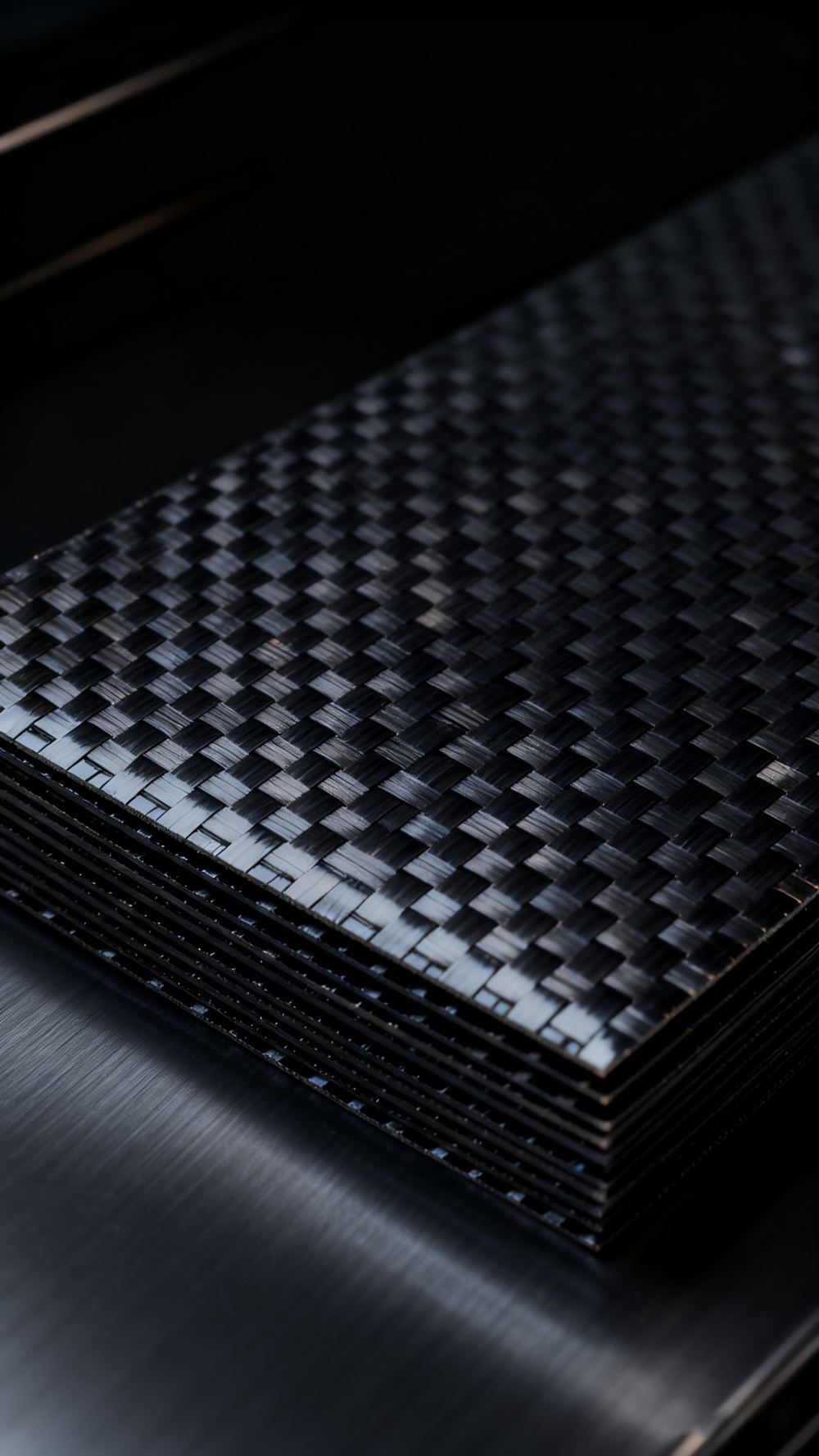
An outside weave is an appearance and surface-construction detail. It does not provide a full layup specification, resin identification or finished-part test result. Ask for the information needed for your application.
Are two tubes with the same outside diameter interchangeable?
Not necessarily. Inside diameter, tolerances, length, construction and connection details may differ. Check the finished drawing and acceptance requirements before approving a substitution.
What should an OEM buyer send first?
Send a drawing revision, intended use, relevant loading conditions, mating-part details and quantities. Identify mandatory requirements and areas where you would consider an alternative construction. The quotation should state what is included and what still needs confirmation.
Discuss a tube requirement
Browse our carbon fiber tube catalog to identify a reference shape, or send a drawing for a project quotation. Include the application and connection details so the proposed construction, tolerances, inspection scope, price and delivery can be confirmed for the project.